Benefits of Earthworms
By their activity in the soil, earthworms offer many benefits: increased nutrient availability, better drainage, and a more stable soil structure, all of which help improve farm productivity.
Improved nutrient availability
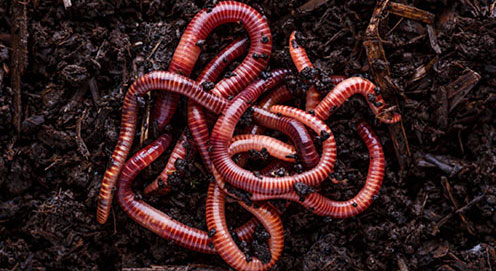
Worms feed on plant debris (dead roots, leaves, grasses, manure) and soil. Their digestive system concentrates the organic and mineral constituents in the food they eat, so their casts are richer in available nutrients than the soil around them. Nitrogen in the casts is readily available to plants. Worm bodies decompose rapidly, further contributing to the nitrogen content of soil. New Zealand research shows that worm casts release four times more phosphorus than does surface soil. Worms often leave their nutrient-rich casts in their tunnels, providing a favorable environment for plant root growth. The tunnels also allow roots to penetrate deeper into the soil, where they can reach extra moisture and nutrients. Earthworm tunneling can help incorporate surface applied lime and fertiliser into the soil.
Improved drainage
The extensive channeling and burrowing by earthworms loosens and aerates the soil and improves soil drainage. Soils with earthworms drain up to 10 times faster than soils without earthworms. In zero-till soils, where worm populations are high, water infiltration can be up to 6 times greater than in cultivated soils. Earthworm tunnels also act, under the influence of rain, irrigation and gravity, as passageways for lime and other material.
Improved soil structure
Earthworm casts cement soil particles together in water-stable aggregates. These are able to store moisture without dispersing. Research has shown that earthworms which leave their casts on the soil surface rebuild topsoil. In favorable conditions they can bring up about 50 t/ha annually, enough to form a layer 5 mm deep. One trial found worms built an 18-cm thick topsoil in 30 years.
Improved productivity
Research into earthworms in New Zealand and Tasmania found earthworms introduced to worm-free perennial pastures produced an initial increase of 70–80% in pasture growth, with a long-term 25% increase: this raised stock carrying capacity. Researchers also found that the most productive pastures in the worm trials had up to 7 million worms per hectare, weighing 2.4 tons. There was a close correlation between pasture productivity and total worm weight, with some 170 kg of worms for every tons of annual dry matter production.
How can you grow earthworm in your farm?
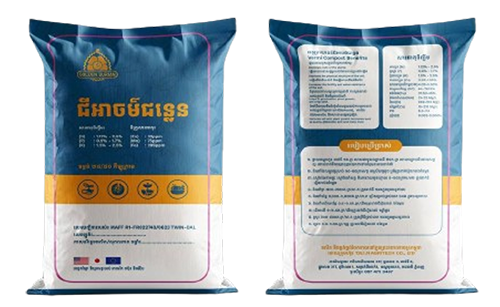
Growing earthworms on your farm can significantly enhance soil fertility and structure. To cultivate earthworms effectively, start by creating a suitable environment that includes a well-aerated, moisture-retentive bed of organic matter like compost or leaf litter. Regularly monitor the conditions to ensure they remain ideal for earthworm activity—this includes keeping the soil moist but not waterlogged and maintaining a pH level between 6.0 and 8.0. An excellent easy way to jumpstart your earthworm farm is by purchasing high-quality vermi-compost from Golden Durian. Our vermi-compost is enriched with essential nutrients and beneficial microorganisms that provide an ideal habitat for earthworms. By integrating this premium vermi-compost into your farm, you not only create a thriving environment for the worms but also enhance soil fertility and structure, leading to improved plant growth and resilience. Investing in Golden Durian’s vermi-compost ensures that your earthworm farm is well-established, productive, and contributes to sustainable farming practices.